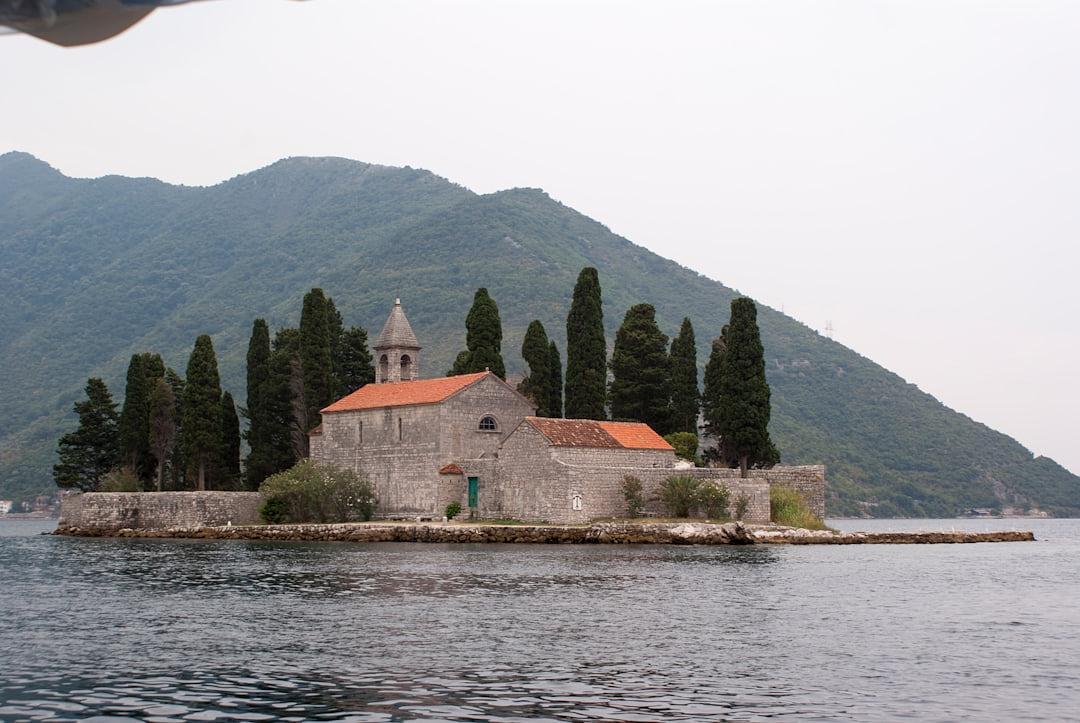
Saint George Catholic Monastery
FMPR+77P, Perast, Montenegro
About
Most monasteries ask for a little imagination. Saint George Monastery hardly needs any. The first thing you notice is not the monastery itself but its location. From across Wadi Qelt, a deep desert canyon between Jerusalem and Jericho, the complex appears glued to the cliff face, a pale cluster of domes, stairways and stone walls suspended above the valley floor. The walk towards it is part of the experience. You descend into the canyon, cross the wadi and gradually climb back towards a place that has attracted monks for more than fifteen centuries. The story begins around 420 AD, when Christian hermits settled in the caves scattered throughout the valley. By the sixth century, thousands of monks are said to have lived in the area. They came seeking silence, although the setting itself is anything but modest. The monastery overlooks one of the oldest routes in the Holy Land, the road linking Jerusalem with Jericho, traditionally associated with the parable of the Good Samaritan. Inside, the atmosphere is surprisingly intimate. Oil lamps flicker beside darkened icons, narrow passages connect chapels and terraces, and the desert heat gives way to cool stone walls. One detail that tends to surprise visitors is that the monastery still relies on water from the springs that first drew monks here over 1,500 years ago. There are grander religious monuments in the region and certainly larger ones. Few, however, combine landscape, history and sheer improbability quite like Saint George Monastery. Standing on the opposite side of the canyon and wondering who looked at this cliff and decided to build a monastery there remains one of the enduring pleasures of the visit.
Location